<img src="https://ws.zoominfo.com/pixel/ODemgiDEhQshzjvCQ1qL" width="1" height="1" style="display: none;">

The multilingual communication experience that gives you confidence at every step. Start Experiencing the Interprefy Difference!

Patricia Magaz

Patricia Magaz

Learn about the latest developments at Interprefy by Patricia Magaz, Global Content Manager at Interprefy.

Recent posts by Patricia Magaz

16 min read

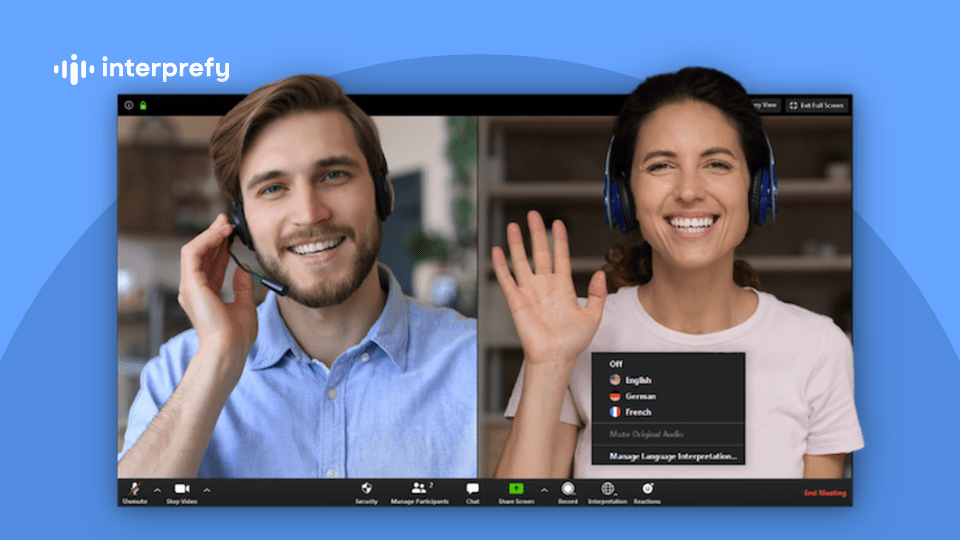
Live Translation Options for Zoom: Interpretation and AI Captions

By Patricia Magaz on September 27, 2022

Last updated: September 2025

You're hosting a business meeting, town hall, or webinar on Zoom, but not everyone joining speaks the same language. Know the feeling? That's where live translation solutions like remote simultaneous interpretation, captions, subtitles and AI speech to speech translation can make the impossible possible.

Zoom offers some built-in language capability but, as many have found out, not the serious capability needed for serious events. Interprefy offers the same high-function multi-lingual support for Zoom as it does for other meeting and conferencing platforms.

Language interpretation, Zoom integration, and managed interpretation services ensure a seamless experience for all parties, to even the most complex set-ups, like for example The White House Summit on Climate Change.

Topics: Live Captions Multilingual Communication & Inclusion Microsoft Teams & Platform Integrations
4 min read

Web conferencing with live language translation: options and cost

By Patricia Magaz on September 19, 2022

It’s hard to believe that just a few years ago most events were not fully capable of reaching large multinational audiences. Now, web conferencing and video broadcasting platforms, like ON24, Zoom and Microsoft Teams, have removed physical limitations from virtual events. Event planners and marketing teams are now able to attract audiences from across the globe, as long as they have a strong internet connection. However, inefficient language translation remains a stark barrier of access to events and creates extra friction. Without a common language or translation tool, many people feel excluded and will not attend the event.

Topics: Remote Simultaneous Interpretation Live Captions Event Planning and Hybrid Events Microsoft Teams & Platform Integrations
7 min read

Types and modes of interpretation you need to know

By Patricia Magaz on August 22, 2022

Interpretation is the art of transforming a message from one language to another, either through speaking or signing. Unlike translation, which involves written communication, interpretation is done verbally or through sign language. This crucial distinction between the two is what sets them apart.

Topics: Remote Simultaneous Interpretation Interpreters & Professional Services
4 min read

Remote simultaneous interpretation: 3 on-site and hybrid scenarios

By Patricia Magaz on August 17, 2022

A hybrid event combines in-person and online elements. In other words, an in-person event that has speakers, attendees or interpreters connecting and participating remotely, is a hybrid event.

Topics: Remote Simultaneous Interpretation Event Planning and Hybrid Events
4 min read

Simultaneous interpretation cost comparison: in-person vs remote

By Patricia Magaz on July 18, 2022

The widespread adoption of digital technology has made simultaneous interpretation more accessible than ever before. While in-person interpretation has witnessed a post-pandemic renaissance for professional, large-scale events, the advent of remote simultaneous interpretation (RSI) options has enabled effective international conversations to take place without the need for an on-site interpreter. Ultimately making the delivery of simultaneous translation more simple, reliable, and cost-effective than ever before.

3 min read

Why Add Live Captions to Your Next Event? | Interprefy

By Patricia Magaz on May 18, 2022

What is the connection between Netflix, Facebook, Instagram, Vimeo, and YouTube? Without a doubt, they are among the top video consumption platforms today. But they all have one thing in common: all of these video platforms include captions or subtitles for video uploads as part of their core features. Why? Let's dive into some of the key benefits of live captioning:

Topics: Live Captions Accessibility & Compliance Event Planning and Hybrid Events
7 min read

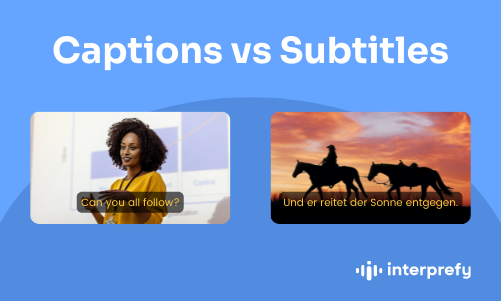
Closed Captions vs Subtitles - what is the difference?

By Patricia Magaz on May 12, 2022

Whether you are a content creator, event manager, meeting organiser, or busy professional, adding subtitles or closed captions to your live content and videos is a game-changer.

A recent study by UK charity Stagetext reports that four out of five young people use subtitles when they watch TV. The charity's research further suggested an average of 31% of people would go to more live events if more had captions on a screen in the venue.

Subtitling and captioning have begun to shape a new norm of how people consume videos and live content. But as soon as words start appearing on video screens, many people tend to use the terms captions and subtitles interchangeably.

Let's look at subtitles and captions in-depth: What are they, and how do they differ?

In this article, we’re going to look at the differences between subtitles, and captioning, and what their best use case is.

In this article:

1. Captioning

1.1. What is captioning?

1.2. The benefits of captions

1.3. Where captions can be used

1.4. How people access captions

1.5. Types of captions

1.6. How captions are generated

2. Subtitles

2.1. What are subtitles?

2.2. Types of subtitles

2.3. The benefits of subtitles

2.4. Where subtitles can be used

2.5 How subtitles are generated

3. The differences between closed captions and subtitles

4. Blurring the lines

Topics: Live Captions Interpreters & Professional Services
5 min read

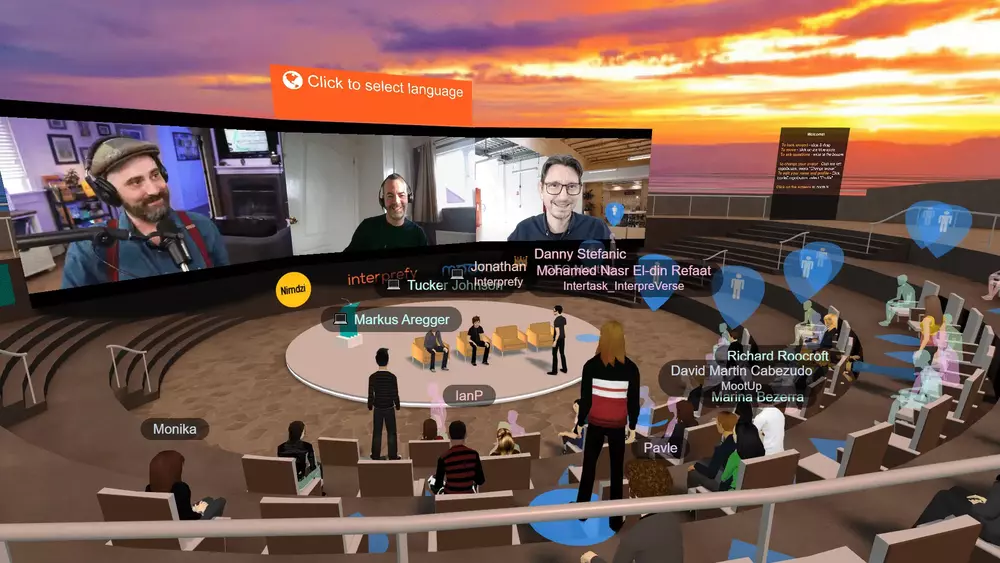
How is the Metaverse changing the event industry?

By Patricia Magaz on April 27, 2022

Most events are, at their core, about connecting people with a shared, valuable experience. From roaring fans at a sold-out stadium to an intimate poetry reading, to an industry-shaping business conference — all attendees are sharing in an experience that’s meaningful for them.

As technology develops, it gives us new ways to create, shape and access these shared experiences. After all, technology has been an integral part of events from the very beginning. Microphones amplified speakers and performers; video broadcasts allowed people around the world to watch events; the internet took accessibility even further and allowed for new degrees of communication and interactivity from attendees.

The "metaverse” is the next technological advancement making waves in the events sphere.

Topics: Remote Simultaneous Interpretation Event Planning and Hybrid Events
6 min read

Checklist: online event data security tips

By Patricia Magaz on April 6, 2022

Thanks to modern technologies, it’s easier than ever for businesses to deliver meetings, webinars, and events via the internet. While the move toward virtual and hybrid events meetings was accelerated due to COVID-19 lockdowns and safety concerns, businesses have embraced the opportunity to reach larger and more distant audiences online.

But businesses need to balance these benefits with new risks and threats. This is especially true today, when virtual and hybrid events are reaching maturity and the initial novelty around the format has given way to clearer measures for performance. As organisations are responsible for safeguarding a huge amount of attendee and speaker data, cybersecurity is a crucial concern for online event managers. Depending on their objectives, hackers may attempt to steal your business data, attendee personal and payment data, or they may seek to spread malware to attendee devices.

Robust cybersecurity is key to minimising these risks and protecting your reputation, along with your audience’s data. For organisations, another concern is complying with strict data privacy regulations like GDPR in the EU or American state-specific laws like the CCPA in California. Failure to meet GDPR compliance, for instance, can cost €20 million or up to 4% of annual global turnover.

While Interprefy isn’t a data security company, we are ISO 27001 certified and our Information Security Management Systems is aligned with standards in the area of data security and recommended best practices. Drawing from our expertise and experience with online and hybrid events, we’ve put together a checklist for organisations looking to improve their event cybersecurity. Let’s dive in.

Topics: Remote Simultaneous Interpretation Multilingual Communication & Inclusion Event Planning and Hybrid Events